
If you’ve ever simmered a pot of homemade chicken broth for 24 hours, you know the feeling.
Your kitchen smells incredible. The broth is rich, golden, and full of flavor. But then a practical question pops up:
How do you store homemade chicken broth safely without wasting it?
Broth takes time to make, and most batches produce far more than you’ll use in a few days. Learning how to store chicken broth properly means you can enjoy that deep flavor for months — without the pressure to use it all right away.
The good news is you don’t need fancy equipment or complicated systems. A few simple methods can keep your broth fresh, safe, and ready whenever you need it.
Here’s a quick win for you:
once you learn a good storage method, making broth becomes far more practical. One long simmer can turn into weeks or months of easy meals.
Below are three reliable ways we store our chicken broth at home — including our favorite one.
I'll tell you what has worked best for us, but you get to decide which method will suit your cooking style and storage options best.
1. Homemade Bouillon: The Flavor Bomb (Our Fave)
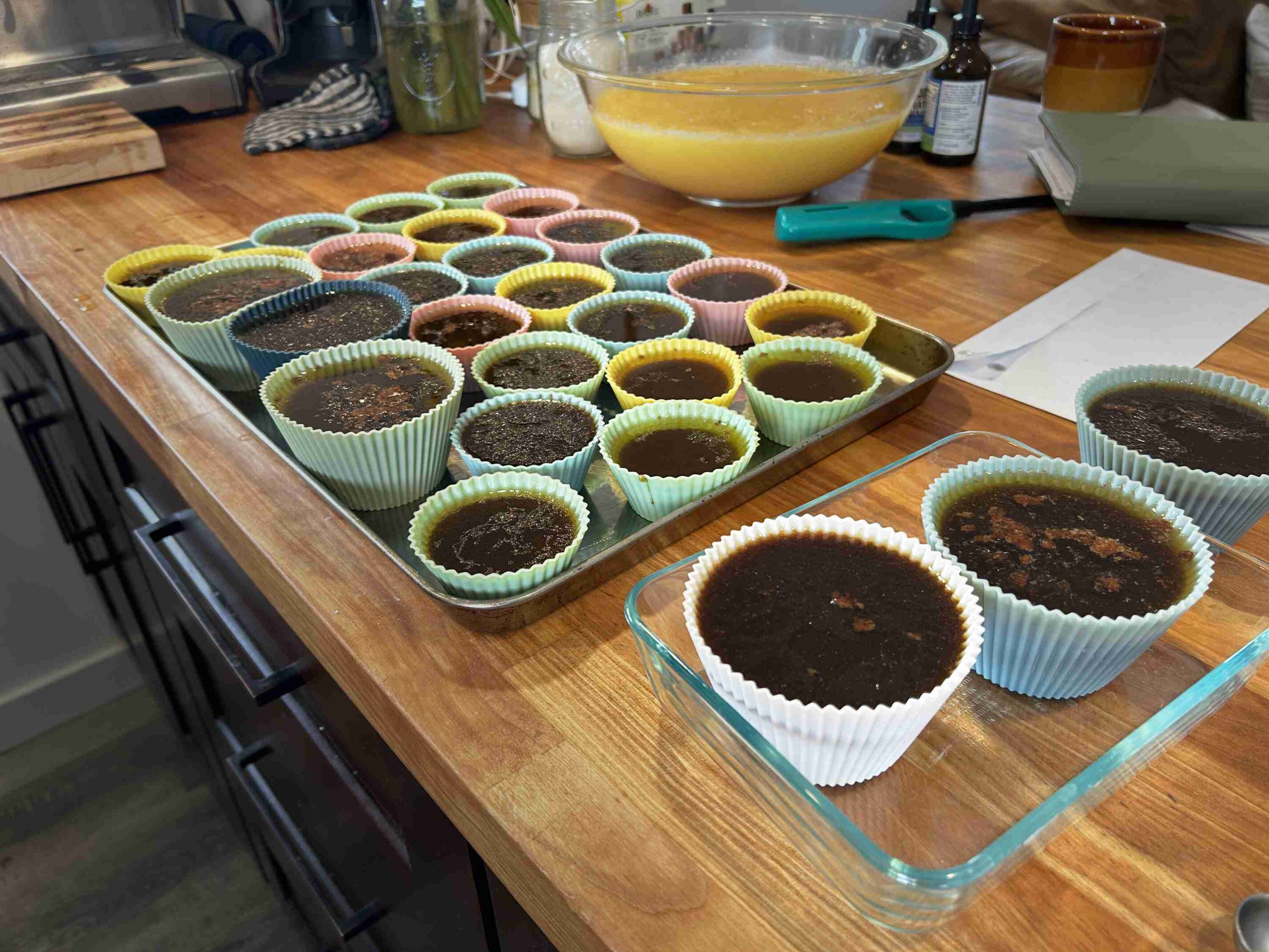
Turning your broth into homemade bouillon cubes or paste is a genius way to preserve it.
This method is perfect if you want concentrated flavor in a compact form. Tabitha will often add it to dishes that need a little extra pop of flavor without the liquid content of regular broth.
We love it for how compact this method is, and how easy it is to get it out of the freezer and use. The only drawback is that you will have a little more work in scrubbing your pots afterwards, since the broth leaves behind rings of hardened residue as it cooks down.
We love this method, but beware that you'll have to scrub your pots more after cooking since the broth leaves hardened residue.
How to do it:
- Once the broth has simmered 24 hours, take out the bones and strain into a new pot.
- Continue to simmer your broth until it’s significantly reduced, thick, and syrupy.
- Pour the concentrated broth into silicone muffin tins or ice cube trays for bouillon cubes.
- Freeze the cubes, then transfer them to a freezer bag, where you can easily access them when needed later.
With homemade bouillon on hand, you can easily add a burst of flavor to any dish—just throw a cube as you're cooking, and you're good to go.
2. Freezing: The Quick and Easy
If you’re looking for convenience, freezing your broth is another fantastic option.
Freezing locks in the fresh flavors and nutrients without the need for any special equipment beyond your freezer.
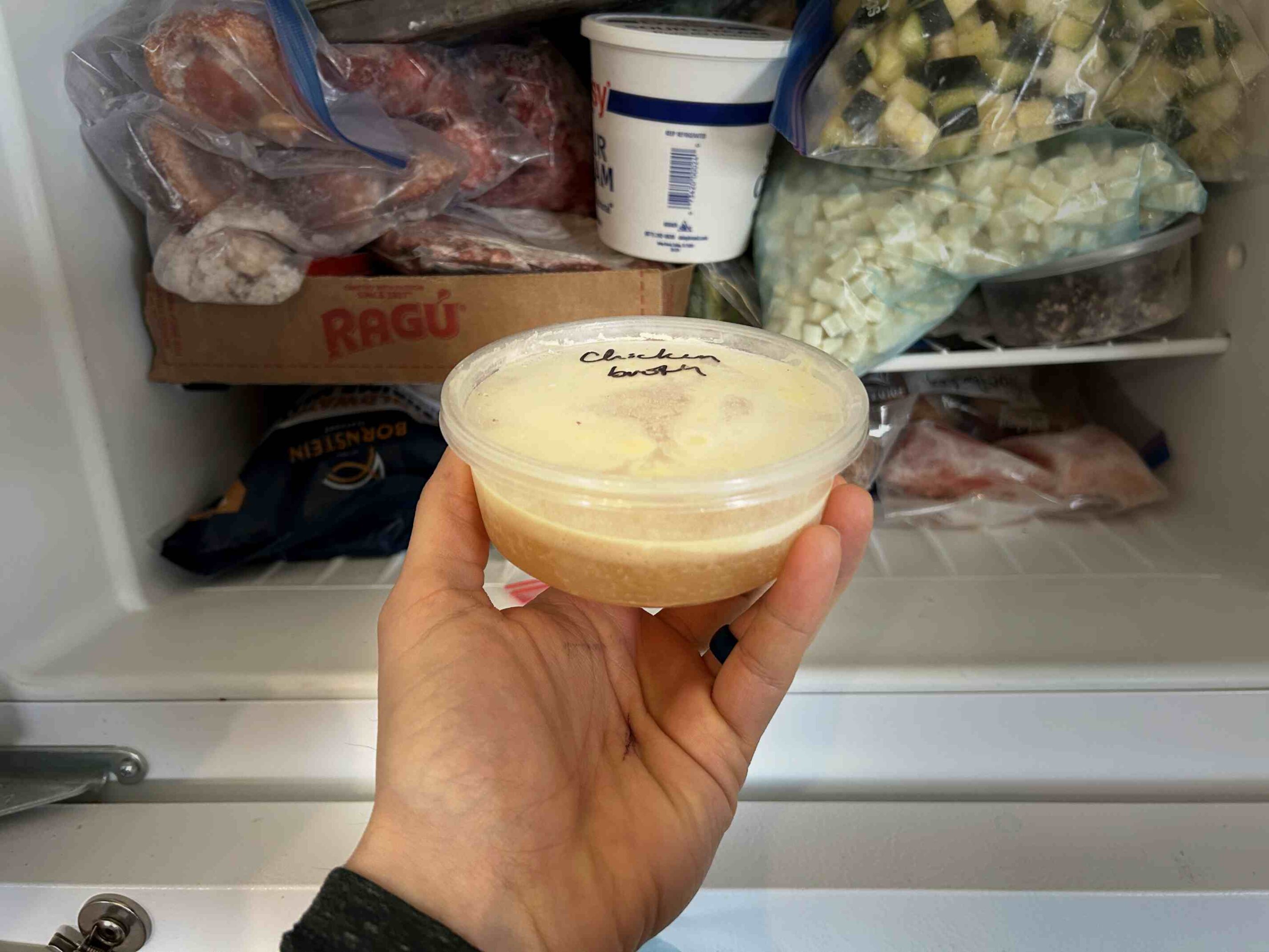
All you'll need is containers to put it in. We tend to wash and keep cottage cheese and other similar containers for just this purpose.
Make sure you remember to label it! If you pull it out after it's been in the freezer for several months, you'll be scratching your head thinking, "What in the world is that?"
How to do it:
- Once the broth has simmered 24 hours, take out the bones and strain out the solids.
- Place the pot in cool water in your sink until it reaches a safe pouring temperature.
- Pour the broth into freezer-safe containers, leaving some headspace to allow for expansion as it freezes.
- For the most versatile portioning, Tabitha uses 2 cup and 1 cup containers
Properly stored, frozen broth will keep its flavor for up to six months.
Just thaw and use as needed, whether you're whipping up a quick gravy or adding depth to your favorite dish.
3. Fat Cap Sealing: Old-School Fridge Storage
One of the most old-fashioned and effective ways to store broth in the fridge for up to six months is by using the natural fat cap that forms on top as a seal.
This method works best with broth made from stewing hens, which tend to produce a thicker layer of fat.
How to do it:
- Once the broth has simmered 24 hours, let it cool for a while, then take out the bones and strain out the solids.
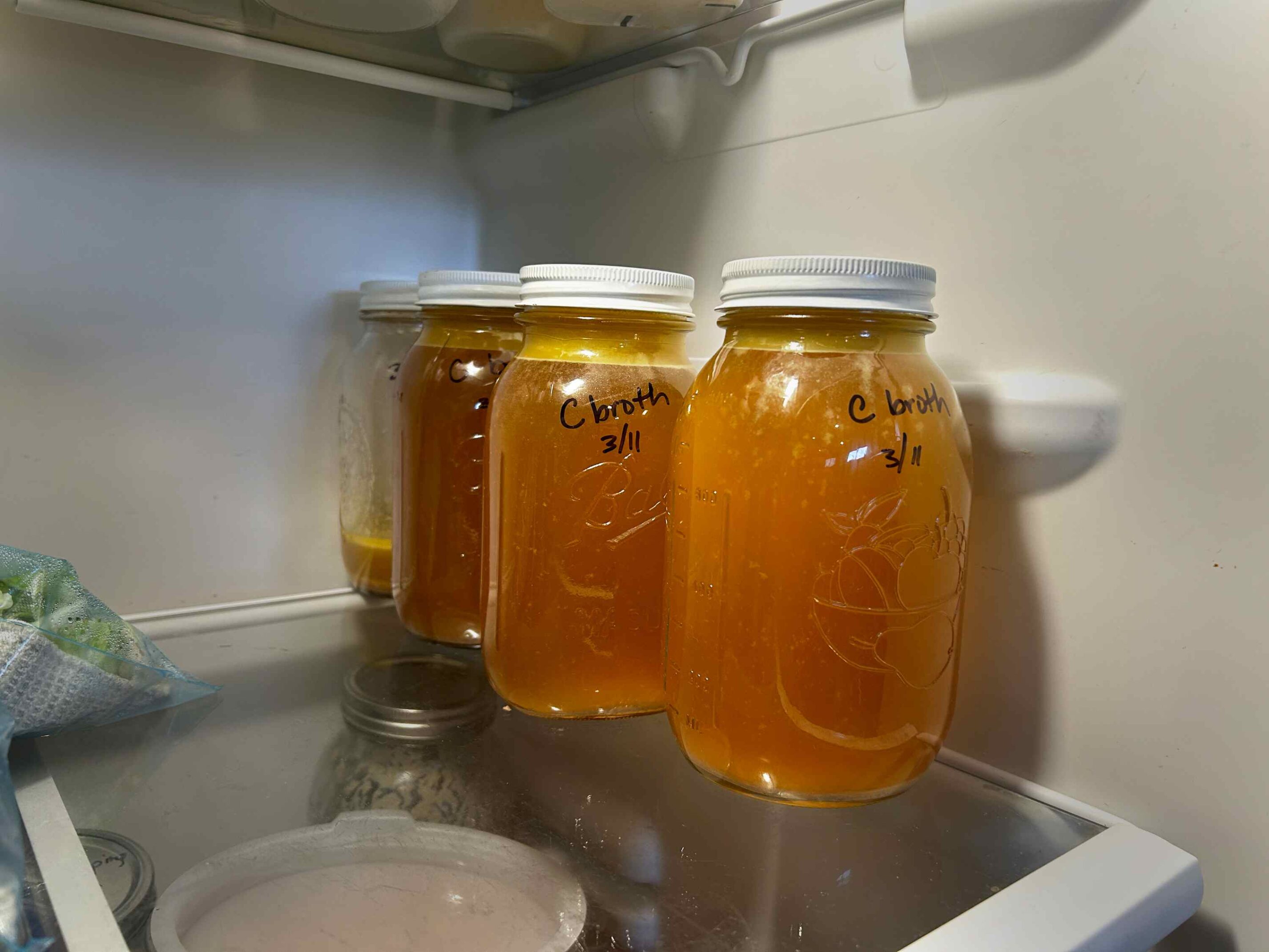
- Pour into jars and put lids on.
- Place the jars into cool water in the sink until comfortable to the touch.
- Once cooled, a layer of fat will solidify on the surface. Make sure this fat layer is at least one inch thick to effectively seal the broth underneath.
- Store the broth in the fridge, and as long as that fat cap remains intact, your broth will stay fresh for months.
When you’re ready to use it, simply remove the fat cap (which you can save for cooking!) and enjoy the rich, preserved broth beneath.
Conclusion
Making chicken broth from scratch is one of those simple kitchen habits that pays you back again and again.
And once you know how to store it well, it becomes incredibly practical!
Whether you prefer concentrated bouillon cubes, convenient freezer containers, or the old-fashioned fat cap method, the goal is the same: keep that hard-earned broth from going to waste.
Each method has its place depending on your kitchen, your freezer space, and how you like to cook.
The important thing is simply to start.
A pot of broth on the stove is one of the oldest traditions in cooking — and once you get into the rhythm of making and storing it, you may find it becomes a regular part of your kitchen too.
And if you’re looking for a great place to start, our chicken backs make some of the richest broth you can make.
They’re full of bones, connective tissue, and collagen — exactly what gives broth its deep flavor and nourishing body.
FAQ: Storing Homemade Chicken Broth
How long does homemade chicken broth last in the freezer?
Frozen chicken broth keeps its flavor and quality for about six months when stored in airtight containers.
How long does homemade chicken broth last in the fridge?
Typically 3–4 days in the refrigerator unless preserved using the fat cap sealing method, which can extend storage up to six months.
What is the best container for freezing chicken broth?
Freezer-safe containers with some headspace work best. We reuse food containers to portion broth into 1 or 2 cup sizes for easy cooking.

0 Comments